Lake Mburo National Park
Overview
Guide to Lake Mburo National Park: Top Things to see & Do
Updated Travel Guide for Lake Mburo National Park
Everything you need to organize your trip to Lake Mburo National Park is included in this thorough guide, including the park’s major attractions, safari activities, the best times to visit, lodging options, and transportation. Lake Mburo, one of Uganda’s top wildlife safari sites, is also the nearest national park to Kampala, allowing visitors to get there in four to five hours by automobile.
The park is located in western Uganda’s Nyabushozi County, Kiruhura District, 240 kilometers from Kampala and around 30 kilometers from Mbarara. The region is well-known for its abundant and fulfilling wildlife experiences and is well situated within Uganda’s Western safari circuit.
In 1933, Lake Mburo was designated as a Controlled Hunting Area; in 1963, it was elevated to a game reserve; and in 1983, it was formally designated as a National Park. At elevations between 1,220 and 1,828 meters above sea level, the park now covers an area of around 370 square kilometers. Lake Mburo, also referred to as a “whisper of the wild,” is a hidden jewel for nature lovers traveling to Uganda because of its exceptional biodiversity, tranquil sceneries, and singular beauty.
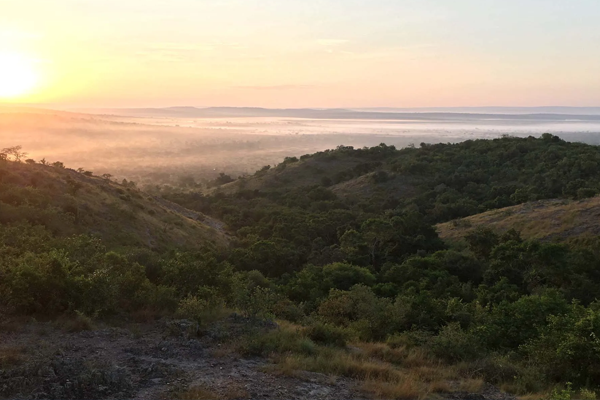
Open savannahs, verdant marshes, and gorgeous lakes make up the majority of the park’s landscape. Wetlands make up more than 20% of the park, and it is surrounded by five lakes that contribute to its natural diversity. Lake Mburo is the perfect place for safari experiences since it provides a range of ecosystems that are home to a large number of aquatic and terrestrial animals as well as a diversity of bird species.
Major Things to See in Lake Mburo National Park
Wildlife
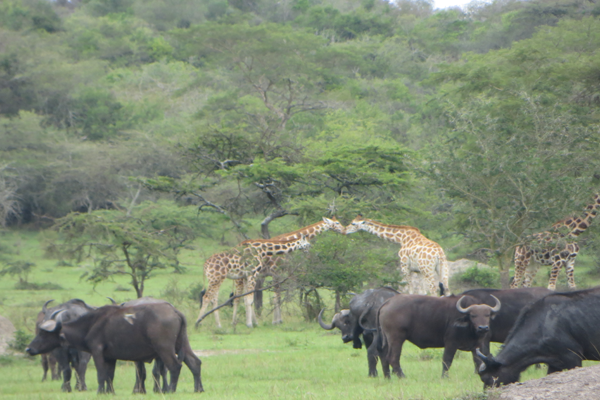
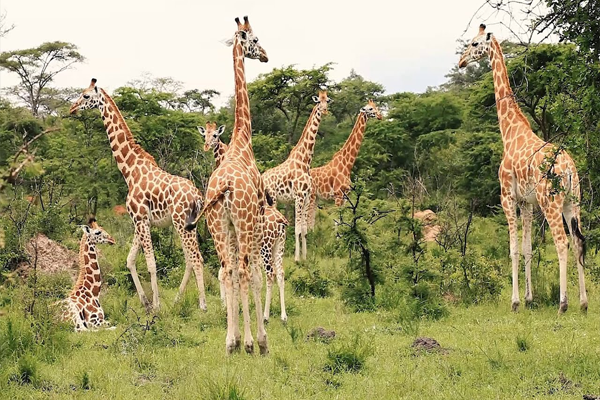
Lake Mburo National Park is home to approximately 68 mammal species, including a mix of primates, herbivores, and other wildlife. The park is particularly renowned for its high concentrations of impalas, zebras, topis, hippos, warthogs, bushbucks, Bohor reedbucks, elands, crocodiles, African buffaloes, Rothschild’s giraffes, and oribis. In addition, visitors may encounter predators and other unique species such as hyenas, side-striped jackals, klipspringers, sitatunga antelopes, and leopards, making Lake Mburo a diverse and exciting wildlife destination.
The birds
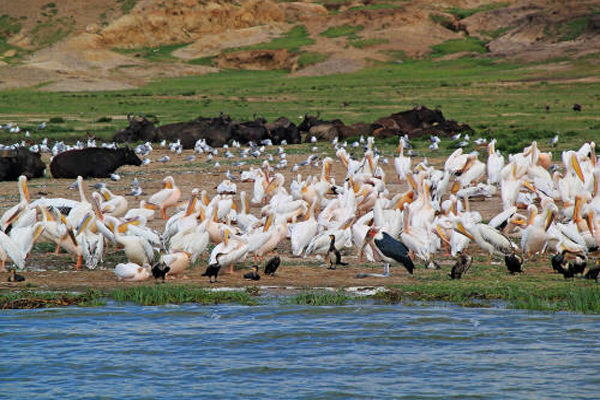
Lake Mburo National Park is an Important Bird Area because it serves as a critical habitat for about 350 bird species. Mosque swallows, black-bellied bustards, Rüppell’s starlings, African harrier hawks, cinnamon-chested bee-eaters, African fish eagles, great blue turacos, bare-faced go-away birds, martial eagles, European bee-eaters, and lilac-breasted rollers are just a few of the many bird species that call the park home.
The uncommon shoebill stork, double-toothed barbet, African wattled lapwing, spur-winged lapwing, African paradise flycatcher, African finfoot, red-faced barbet, pied and malachite kingfishers, and the magnificent bateleur eagle are among the other bird species found in the park. Eastern plantain eaters, banded snake eagles, green woodhoopoes, laughing doves, pink-backed pelicans, pennant-winged nightjars, Senegal thick-knees, African emerald cuckoos, Diederik cuckoos, African darters, southern red bishops, rufous-bellied herons, and Namaqua doves are among the birds that Lake Mburo protects.
What to do in & around Lake Mburo
Visitors may enjoy a variety of thrilling experiences on Lake Mburo National Park safaris. Guided game drives, beautiful boat or launch cruises, birding excursions, nature and bush walks, cycling adventures, quad biking, and immersive cultural interactions are all available to visitors. Here is a thorough rundown of the best things to do in Uganda’s Lake Mburo National Park.
Game drives
In Lake Mburo National Park, game drives are exciting and fulfilling. The park is one of the best places to see animals on broad savannah plains. Visitors may explore a number of well-known trails with a 4WD safari vehicle, including the Kazuma, Kigambira Loop, and Zebra tracks, all of which provide fantastic chances to see wildlife. Zebras, leopards, giraffes, buffaloes, impalas, elands, topis, oribis, and many more animals may be seen up close during a two to three-hour guided drive along these paths.
Bird-watching/birding
Joining a guided bird-watching excursion in Lake Mburo National Park offers an excellent opportunity to admire a remarkable variety of birdlife. These species inhabit acacia woodlands, wetlands, and open water zones, found in areas such as Rubanga Forest, Warukiri, and the Miriti Swamp Valley. Notable birds commonly spotted on these tours include saddle-billed storks, black-throated barbets, bare-faced go-away birds, brown-chested lapwings, Nubian woodpeckers, mosque swallows, white-winged tits, and the African finfoot.
Sport fishing
For enthusiastic fishermen visiting the park, sport fishing excursions rank highly. When utilizing authorized and well-maintained equipment, visitors may have an excellent fishing experience on Lake Mburo. Anglers must have a current fishing permit in order to participate in this activity, which may be readily arranged in advance through a local tour operator with a license.
Nature walks
Guided walks provide full immersion across the open savanna landscapes. Visitors can admire wildlife and birdlife during an expert-led nature walking experience. Prime locations for walking safaris in Lake Mburo National Park feature salt lick paths, Rubanga Forest, and Kazuma Hill.
Boat cruise experience
Visitors go on a two- to three-hour picturesque boat ride to see aquatic animals. The trip displays a variety of aquatic animals, such as birds, crocodiles, and hippos. Cruises take place in the morning or the afternoon, and each trip offers unique experiences.
Cycling tour
Guided cycling tours present a special chance to discover the beauty of Lake Mburo National Park. Guests pedal across open park plains while spotting remarkable wildlife such as elands, topis, giraffes, impalas, and numerous zebras.
Horseback riding excursions
In Lake Mburo National Park, visitors may also engage in engaging horseback riding experiences, which provide a unique opportunity to see the park’s abundant animals. You may get up close and personal with a variety of species, including impalas, bushbucks, zebras, and duikers, on a professionally guided horse ride. Along with other fauna, riders may also see a variety of bird species.
When should you visit Lake Mburo National Park, Uganda?
Any month of the year may be used to plan a safari to Lake Mburo National Park. The dry season, which runs from June to September or, alternatively, from December to February, is the most advantageous time of year.
Where to stay during the Uganda safari in Lake Mburo National Park
Budget, medium, and luxury accommodations are available both inside and outside the park. Hyena Hill Lodge, Mburo Eagle’s Nest, Kigambira Safari Lodge, Lake Mburo Luxury Tented Camp, and Mihingo Lodge are among the locations that are available for reservations.
Getting to the park
Lake Mburo National Park can be accessed by road or air, with road journeys lasting about four to five hours from Kampala. Travelers follow the Kampala–Masaka–Mbarara highway and usually ride in a comfortable four-wheel-drive safari vehicle. Park entry points include Sanga Trading Centre gate and Nshara Park gate. Air travel requires a flight from Entebbe International Airport (EBB) to Mbarara Airstrip, located roughly thirty kilometers away.

Get A Questions
Embrace the journey of reconnecting with nature and the wild spirit within yourself.
Experience Tranquility, Discover Your Perfect Nature Retreat
your door to exceptional natural life encounters and gorilla trekking experiences in East Africa.