
Gazetted in 1964, Bokora Corridor Wildlife Reserve is one of the best reserves you should expect to explore on a safari in Uganda. The Bokora Corridor Wildlife Reserve lies in Eastern Uganda, between Moroto district and Mount Elgon landscapes. This reserve forms part of the spectacular reserves in the Greater Karamoja region. The other reserves include Pian Upe Wildlife Reserve and Matheniko Wildlife Reserve.
Bokora Corridor Wildlife Reserve is set at an elevation range of 1000 to 2100m. It covers an area of 2056 sq. km, and adjacent to it are the Bokora people. The reserve’s landscape features the dry plains that stretch from Mount Kadam to Mt. Napak. It also features a unique plateau with dots of inselbergs, and vegetation cover is characterized by wooded grassland savanna.
What to see in Bokora Corridor Wildlife Reserve
Diversity of Wildlife
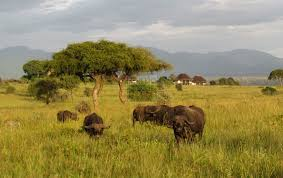
The Bokora Corridor Wildlife Reserve holds countless wildlife species, including Uganda Kobs, buffaloes, giraffes, zebras, topis, leopards, oribis, Jackson’s hartebeests, spotted hyenas, and Oryx. Other wildlife in Bokora Corridor Reserve include gazelles, reedbucks, lesser Kudus, elands, roan antelopes, topis, and more.
Bird species
A variety of birds exist in Bokora for birders to identify, including the dusky turtle dove, white-headed buffalo-weaver birds, lemon doves, thick-billed honey guide, grey cuckoo-shrikes, African hill babblers, Hartlaub’s turacos, Alpine chat, Eastern bronze-napped pigeon, black-throated wattle eye, and others. The ideal birding spots in the Bokora Reserve include the Loporokocho swamp.
Activities to do in Bokora Corridor Wildlife Reserve, Uganda
Game drives
The Bokora Corridor Wildlife Reserve offers amazing game drives, a great opportunity for nature lovers to encounter its diverse wildlife species. A guided game drive through the Bokora Corridor Reserve allows you to search for wildlife such as zebras, hyenas, topis, Rothschild giraffes, cheetahs, reedbucks, gazelles, hartebeests, lesser kudus, and topis.
Bird-watching/birding
Birders also have plenty of birds to spot on a guided birding tour in Bokora Wildlife Reserve. The birds in this reserve include the mountain yellow warblers, African hill babblers, dusky turtle doves, black-throated wattle eye, thick-billed honey guide, lemon dove, and many others.
Nature walks
You can also have a chance to have a deep immersion into the Bokora Corridor Wildlife Reserve wilderness. A guided nature walk through Bokora allows you to explore the hidden spots with diverse wildlife and birds. Visitors on a nature walk are led by an experienced guide.
Cultural experiences
Visit the Bokora community living adjacent to the reserve to explore more about their amazing traditions and cultures. At the Bokora community, expect great entertainment from the dances and musical performances as showcased by the Bokora people.
The Accommodation Options to Stay in Bokora Corridor Wildlife Reserve, Uganda
Bokora Wildlife Reserve is still not developed in terms of accommodation options. The accommodation facilities to consider for overnight stay exist in the surrounding areas, but currently, visitors can opt for camping.
Accommodation in Moroto includes Kara Tunga Guesthouse, Hotel Africana Moroto, and Guesthouse for Uganda Wildlife Authority, and more. Moroto to Bokora Wildlife Reserve is a 30-40 minute drive.
When to visit Bokora Corridor Wildlife Reserve
Bokora Corridor Wildlife Reserve can be visited at any time of the year. However, the dry season is the most ideal period for you to enjoy a smooth tour through this wildlife reserve. This can be during the long dry spell from June to September or anytime around the short dry season (December to February). The road conditions are great during the peak dry season, unlike the wet season when there is heavy rainfall that is in April, May, and November.
What to take on the Bokora Corridor Wildlife Reserve tour?
When planning to visit Bokora Corridor Wildlife Reserve, some of the essential items to carry include comfortable safari trousers, long-sleeved shirts, insect repellents, waterproof hiking boots, a rain jacket, a safari hat, and a pair of binoculars. Other items to carry include sunglasses, visas, and valid passports.
Challenges faced by the Bokora Corridor Reserve
 Bokora Wildlife Reserve, like most protected areas, still experiences several conservation challenges. The common challenges faced by this reserve include poaching, habitat loss, and human-wildlife conflict. Poaching remains a major threat to wildlife conservation in the Bokora Corridor Wildlife Reserve. This results in a reduction in the wildlife population in the reserve. Habitat loss arising from logging, encroachment by humans threatens the key survival spots for wildlife in the reserve.
Limited accommodation and inaccessibility are among the main challenges that are encountered in the Bokora Wildlife Reserve. The reserve has no lodges built, except visitors can have camping as an alternative for overnight stay. In terms of road connectivity, the routes to Bokora remain in poor conditions and can become worse during the wet season.
How to get to Bokora Corridor Wildlife Reserve
Bokora Wildlife Reserve is accessible by road, approximately 7-hour drive on the Kampala-Mbale route. Access to Bokora Reserve on the Kampala-Gulu Highway takes about 8 hours.
Through the Eastern route to Bokora Corridor Reserve, expect to visit key sites on your way. The major areas of interest to explore before you reach Bokora Corridor Reserve include Ssezibwa Waterfalls, located 32 km from Kampala city. The Ssezibwa falls are found in Mukono district and can be accessed on the Kampala-Jinja route. Access to the Ssezibwa waterfalls is UGX 20,000 for foreign visitors and Ugandans 5,000.
Mabira Forest Reserve –This is located Buikwe district and is among the few natural tropical forests left on the African continent. Mabira is a perfect stopover spot for tourists heading to Bokora Corridor Reserve through the Kampala-Mbale route. In Mabira, you can enjoy zip-lining, cycling, bird-watching, and forest walks.
Jinja –where you can experience the best of tubing, bungee jumping, jet-boating, white-water rafting, and boat tours. As you head to the far east, you can also make your trip to the Sipi Falls and later connect to the Bokora Corridor Reserve. The available stopover sites can be combined with Bokora Wildlife Reserve tours. But you may require more days to enable you to explore in depth the hidden gem that awaits along the Eastern circuit. The Kampala-Gulu route to Bokora Corridor Wildlife Reserve allows you to explore places like Ziwa Rhino Sanctuary and Murchison Falls National Park.