
Which Sector in Bwindi Forest Has Many Gorilla Groups
Overview
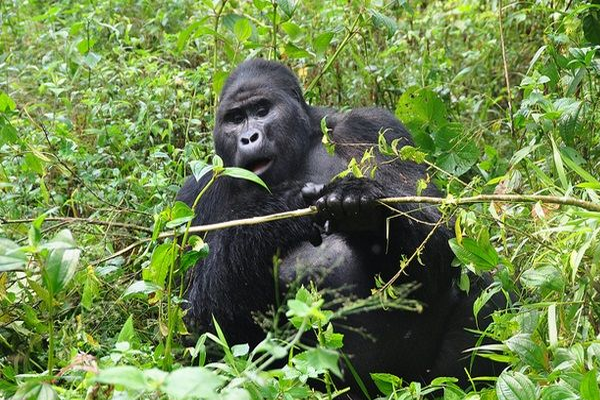
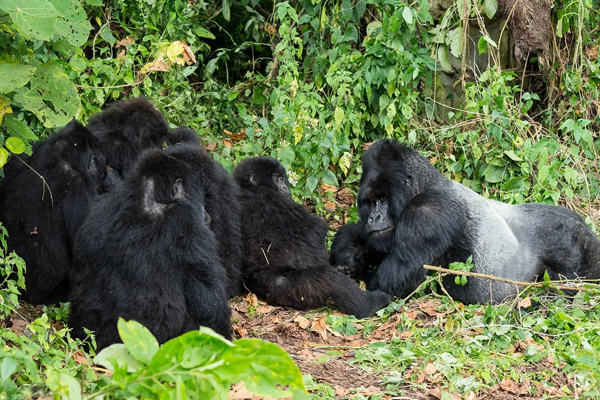
Only in the Rushaga sector, at the park’s southernmost tip, can you find a large population of mountain gorillas, making it an ideal location for a gorilla trekking adventure. Within the Rushaga sector, you may find around ten habituated gorilla groups. This location is known for its high terrain and stunning views of the Virunga Volcanoes and the Congo area. The Rushaga region is conveniently situated so that tourists visiting Kisoro or Mgahinga National Park can also visit the habituated mountain gorilla families in the area.
Since Rushaga is home to numerous gorilla groups, it is the ideal location for tourists to fulfill their goal of gorilla trekking. This takes into account the fact that no more than eight guests are allowed to visit each group of gorillas on any given day. On top of being the only region that offers gorilla habituation experience, Rushaga also offers normal gorilla treks.
Gorilla groups to visit in the Rushaga sector in Bwindi
The Rushaga trailhead is a great place to see habituated gorilla populations. Find out more about the make-up of the various gorilla families. You can learn interesting and useful things about the gorillas from each of the different families. The following are the gorilla groups that can be visited in the Rushaga area.
Rwigyi
An offshoot of the Kahungye gorillas is the Rwigyi gorilla family. The silverback gorilla known as Rwigyi is in charge of the troop. Rwigyi left with females and infants from the Kahungye group after the internal conflicts, and the group eventually separated.
Mucunguzi gorilla family
The Mucunguzi silverback gorilla is the head of the Mucunguzi gorilla family, which broke away from the Bweza. The group’s name comes from the ancient Zulu term for “savior,” Mucunguzi silverback. There are ten people called Mucunguzi right now, and a lot of them are female.
Kutu gorilla family
One of the recently formed groups in the Rushaga region is the Kutu gorilla family. Twenty members make up this group, which is headed by the Ndugu Silverback gorilla. This group encompasses not just juveniles but also mothers, babies, and subadult females.
Tindatine gorilla group
The Rushaga officially opened to trekking in 2024, welcoming the Tindatine gorilla family as its newest members. Those tourists looking for real adventure can set out on the Tindatine group trek. The Nshongi family of gorillas included this particular group.
Mishaya gorilla family
In the Rushaga sector, you can see habituated gorilla groups like the Mishaya family. The Mishaya silverback gorilla is the inspiration for the name of this group. The current Mishaya gorilla group split off from the original Nshongi gorilla family. In the past, Mishaya Silverback engaged in combat and raiding activities. Consequently, he left with a large group and now counts twelve gorillas among his members.
Nshongi gorilla family
The Nshongi people were first seen near the Nshongi River. The Nshongi family of silverback gorillas was the biggest at the time, consisting of 32 individuals, and they still roam freely throughout the Rushaga area of Bwindi. As a result of internal strife and other natural causes, the group’s membership eventually shrank to its present 18 members.
Bweza gorilla group
The first Bweza group, which later became known as the Nshongi group, consisted of just ten members. After splitting off from the Nshongi group, Bweza silverback gorillas formed their own group, which now includes females. Today, trekkers in the Rushaga sector can see the Bweza gorilla family, which separated from Nshongi in 2012.
Kahungye gorilla family
In 2011, Kahungye became more open to trekking. Originally consisting of 29 individuals, this gorilla family has since shrunk to 17. Fights and splits caused the numbers to decrease. Separations led to the formation of new groups, such as the Tindatine and Busingye gorilla groups.
Busingye gorilla family
“Busingye” means peace in the Rukiga language, which is where the name of the Busingye gorilla family comes from. This is taking into account Busingye’s habit of being tranquil. In the Rushaga area, the Busingye family is one of the most difficult to trace. This is due to the fact that its members frequently venture further into the thick Bwindi Impenetrable Forest. There are ten members of Busingye at the moment.
Bikingi gorilla family
After finishing their habituation cycle in 2016, the Bikingi gorilla family is free to wander the Rushaga area. Once this gorilla family member was vanquished by Mishaya, it departed from the group. This led to the inclusion of Bikingi among the Mishaya group’s female members.
The best time to visit the Rushaga sector
Gorilla trekking in Rushaga is possible year-round. However, gorillas prefer the dry months because of the pleasant weather that makes jungle exploring easy at those times. Typically, Bwindi’s dry season begins in June and continues through August and September, followed by December, January, and February.
Less precipitation, potentially drier terrain, shorter and less dense vegetation, and often clear skies characterize the dry months. Contrast this with the wet season, which begins in March and continues through May before ending in November. The months of May through September have the most rainfall, and the weather is often wet and slippery during this time.
Where to stay in Rushaga
Gorilla Safari Lodge, Gorilla Valley Lodge, Nshongi Camp, Rushaga Gorilla Lodge, Rushaga Gorilla Camp, Gorilla Leisure Lodge, and many more are among the available options for overnight stays in and around Rushaga.
How to reach Rushaga sector
Rushaga may be reached by car from either Entebbe or Kampala in 8 to 9 hours via the Masaka-Mbarara route. Make a pit stop at the Equator and other landmarks on the way from Kampala to Rushaga via Mbarara. Even yet, if you want to travel by car, you can leave Kigali and reach Rushaga by crossing the border at Katuna or Chanika. Traveling by car from Kigali to Rushaga may take anything from four to five hours.
Traveling from Entebbe International Airport to Kisoro Airstrip can be accomplished in around one to two hours by aircraft. Getting to the Rushaga region is a breeze with an airplane. To reach the Rushaga sector, you will need to drive a short distance after arriving at Kisoro Airstrip.
Finally, among Bwindi Impenetrable National Park’s habituated gorilla groups, the Rushaga region is home to the highest concentration. Rushaga is the perfect area to visit on a large group gorilla trip because it is home to the highest densities of these gorilla families. For the best gorilla trekking excursions in Uganda, book with Maranatha excursions and Travel.

Get A Questions
Embrace the journey of reconnecting with nature and the wild spirit within yourself.
Experience Tranquility, Discover Your Perfect Nature Retreat
your door to exceptional natural life encounters and gorilla trekking experiences in East Africa.