
Differences Between Gorillas and Chimanzees
Overview
Gorillas and chimps are two of Africa’s most popular and must-see primates, and while they may appear similar, there are several notable differences between them.
Primate enthusiasts who have never tracked gorillas or chimps are frequently perplexed by the distinction between the two species. Gorillas and chimps are Great Apes and near relatives of humans in the animal realm. Do you want to be able to recognize these primates with confidence? Simply dive into Africa’s rainforests to learn more about their fascinating behavior, life, physical features, and other human-like characteristics. In this essay, we’ll go over those differences to help primate fans better comprehend these Great Apes. Because of this, which primate is more friendly? Gorilla or chimpanzee? Which is more human-related? Simply continue reading to learn about these distinctions!
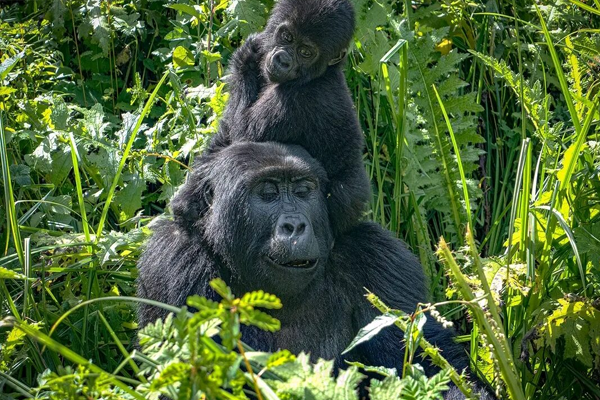
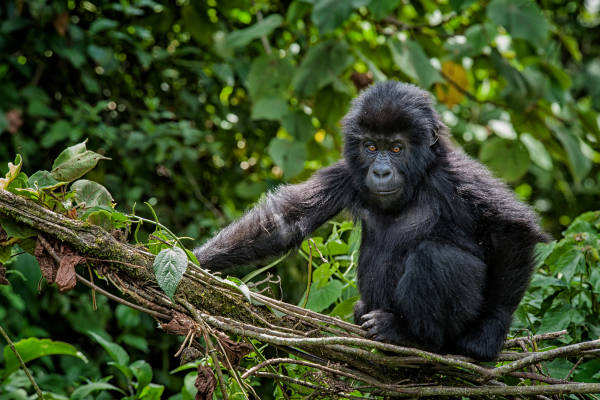
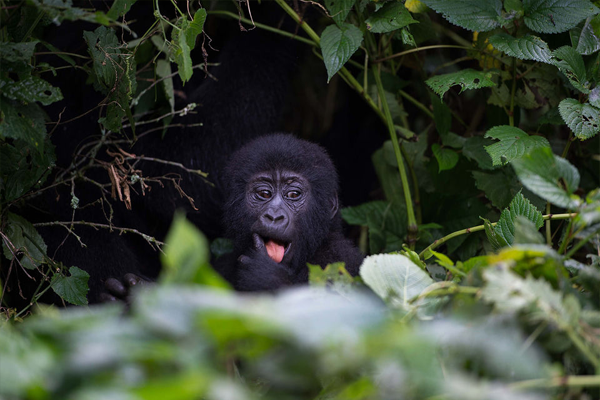
Mountain Gorilla (Gorilla beringei)
Chimpanzees and gorillas are both members of the Hominidae family, however the latter is in the Pan genus and the former is in the Gorilla genus.
Physical characteristics- size, weight, and appearance.
In terms of size/height, weight, and facial features, chimpanzees and gorillas are very different from one another. Among the great apes, gorillas can reach a weight of up to 240 kg, while chimpanzees are on the smaller side, weighing in at around 100 kg. Muscles and chests in gorillas are more prominent than in chimps.
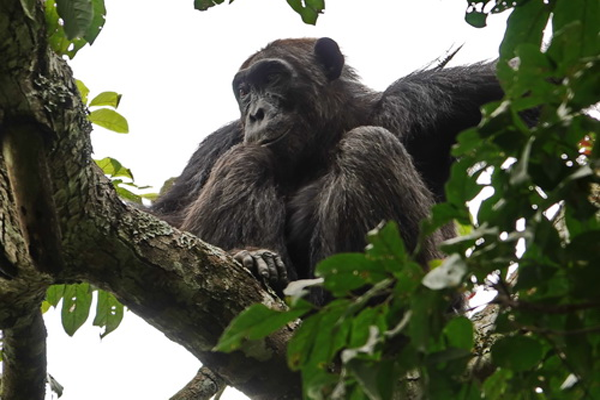
Gorilla ears are smaller and extend towards the rear of the head, but chimpanzee ears are larger and more prominent and stick out from the sides of the head. Faces of chimpanzees are more pinkish than those of gorillas, which are remarkably dark.
Distribution
Gorillas live in smaller, more isolated groups within their entire area, and they consume less space than chimpanzees do. While it is likely that chimpanzees still exist in certain areas, no proof has been found of them living in isolated populations inside their natural habitat. The distribution of chimpanzees in the Ugandan rainforests is in sync with the discrete areas where they are found in nature.
Intelligence levels
The astonishing intelligence of chimpanzees has long been recognized, despite their diminutive size compared to gorillas. When you go to see these two monkey species in their natural habitats, you will be astounded by the chimpanzees’ tool use.
Natural habitats
Tropical rainforests are the only suitable habitat for gorillas. Of the four subspecies of gorillas, three inhabit lowland rainforests (the Cross River gorillas, the western lowland gorillas, and the eastern lowland gorillas) and one inhabits mountainous rainforests. Bamboo forests are a home for mountain gorillas, particularly in Rwanda’s Volcanoes National Park. A small number of chimpanzees call the forest-savannah mosaic that borders rainforests home. These primates share the humid rainforests with gorillas. Gorillas and chimpanzees both inhabit tropical rainforests, however chimpanzees, unlike gorillas, do not inhabit the savannah vegetation found outside of rainforests.
Diet and food habits
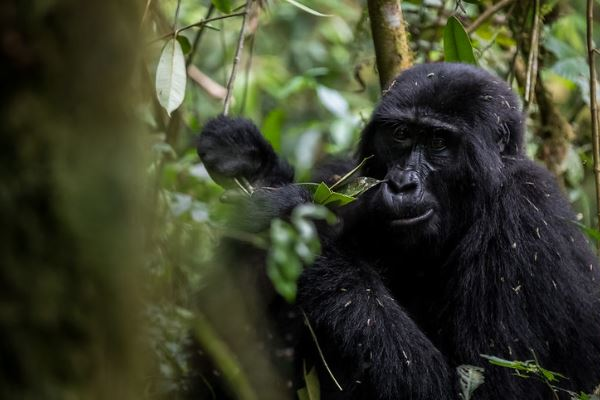
Chimpanzees and gorillas both eat mostly plants, however chimpanzees focus on fruit and bamboo shoots whereas gorillas eat more flowers, leaves, stems, and tree bark. You will learn that chimpanzees mostly eat the fruits of certain tree species while tracking them in the Kibale and Budongo Forests. Nonetheless, in their native environments, both of these ape species display remarkable versatility when it comes to the items they eat.
Locomotion
Gorillas and chimpanzees are both quadrupedal, but how much time each spends on the ground or in trees depends on their specific food needs. Because of their massive frame, gorillas approach tree climbing with extreme caution. You can kill chimpanzees just as easily in a treetop as you would on the ground, making them a fascinating arbo-terrestrial. As an interesting aside, you should know that, unlike gorillas, these primates spend more than three quarters of their time perched on trees, where they perform a great deal of their swinging and jumping. On the ground, both chimpanzees and gorillas balance on their knuckles while their hind quarters rest on the flat bottoms of their feet.
Social organization
Gorilla armies tend to stick around for a while, which is another manner in which gorillas vary from chimpanzees socially. The majority of gorillas in a group tend to stick together, making it easy to discern both geographical and temporal variations when following a single group across time. This is in contrast to chimpanzee communities, where new members join at the same pace as old ones leave, or even better, when the community is occasionally split into two or more units, the members of which often go their own ways for days, weeks, or months at a time. In contrast to gorillas, chimpanzee communities are known to undergo frequent changes in composition.
Social behavior
Gorillas are typically more vocal than chimpanzees, which is one way in which their vocalizations differ from those of other primates. When they’re in their natural environments, chimpanzees, on the other hand, make a lot of noise.
Relation with other species
In terms of connections with other creatures especially humans, the gorillas are highly shy and more aggressive than chimpanzees and are likely to charge and sometimes even attack physically (although rarely experienced). Chimpanzees on the other hand rarely charge at humans and are more fun.

Get A Questions
Embrace the journey of reconnecting with nature and the wild spirit within yourself.
Experience Tranquility, Discover Your Perfect Nature Retreat
your door to exceptional natural life encounters and gorilla trekking experiences in East Africa.