
Volcanoes National Park Rwanda
Overview
Located in East-Central Africa, Volcanoes National Park is a breathtaking natural gem that is well-known throughout the world for preserving the Virunga Volcano range and endangered mountain gorillas. It is the oldest national park in Rwanda, having been created in 1925, and despite its modest size, it has an exceptional level of ecological diversity.
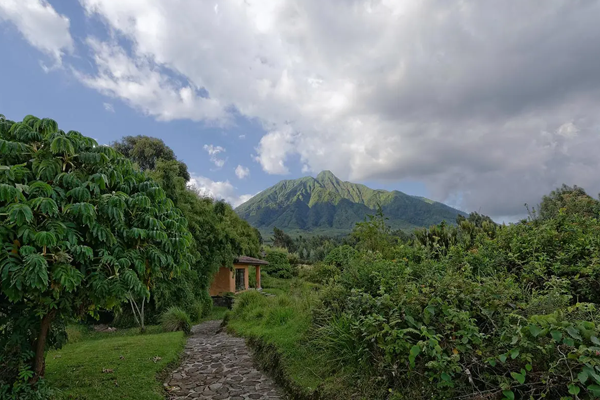
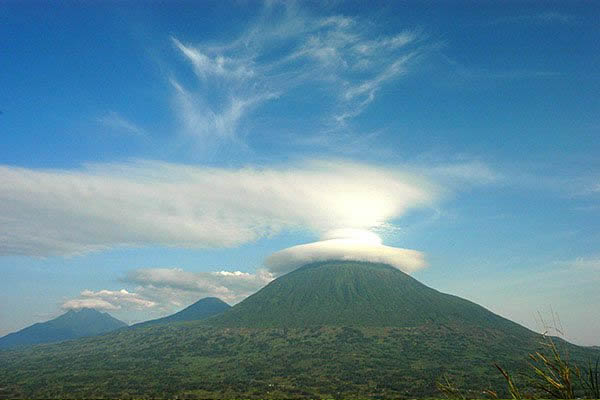
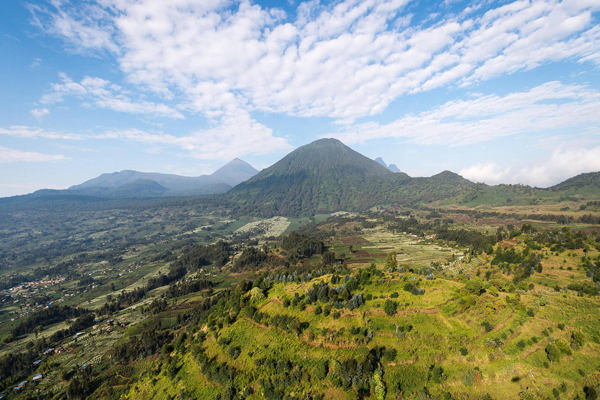
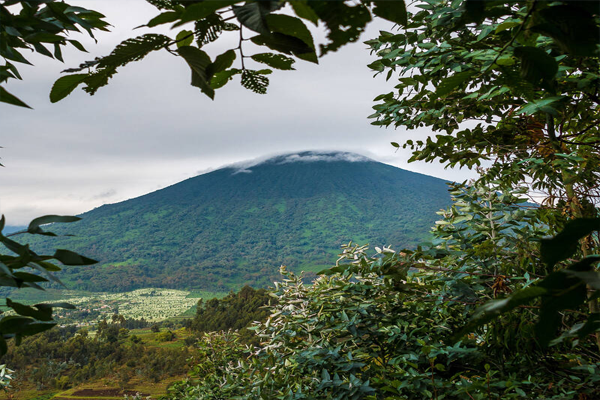
Despite its small size—roughly 160 square kilometers the park has an amazing range of habitats and activities. Its varied terrain includes heath vegetation, open grasslands, marshes, bamboo zones, and deep evergreen forests, all of which contribute to the thriving montane ecology. The magnificent series of dormant Virunga volcanoes that dominate the park’s stunning landscape and define its character is the source of the park’s name.
Location of Rwanda’s Volcanoes National Park
Volcanoes National Park is located in the Musanze District in the Virunga Conservation Area in northwest Rwanda. One of the most significant transboundary ecosystems in East Africa is the larger Virunga region, which is shared with Uganda and the Democratic Republic of the Congo in addition to Rwanda.
The famous Virunga Volcanoes, which include Mount Sabyinyo, Mount Muhabura, Mount Bisoke, Mount Karisimbi, and Mount Gahinga, are among the park’s most notable geological features. Volcanoes National Park’s striking sceneries and distinctive natural character are shaped by these tall volcanic peaks.
The History of the Park
Originally established in 1925 and later renamed in 1929, Volcanoes National Park was once part of the vast Albert National Park. Following Rwanda’s independence from Belgian colonial rule in the 1960s, the park was separated and officially became Volcanoes National Park. Global attention turned to the park in 1967 when renowned American primatologist Dian Fossey made it her research base. While studying mountain gorillas in the Virunga Mountains, she founded the Karisoke Research Center, located between Mount Bisoke and Mount Karisimbi. This research facility played a major role in advancing scientific understanding of mountain gorilla behavior and social structure. Fossey’s groundbreaking work at Karisoke also laid a strong foundation for modern gorilla conservation efforts, helping to protect these endangered primates and their fragile habitat for future generations.
Dian Fossey became well-known for her relentless battle against poaching and devoted her life to learning about the behaviour of mountain gorillas. Sadly, she was mysteriously assassinated in 1985, ending her career. Dian Fossey is now interred at the Karisoke site with a number of gorillas, including Digit, the gorilla she loved and shielded.
The Rwandan civil war had a significant impact on Volcanoes National Park in the 1990s, disrupting park operations until about 1999. The park has advanced significantly since peace and stability were restored, particularly in the areas of gorilla conservation and tourism growth.
To save animals, a number of conservation programs have been implemented, such as Rwanda’s well-known gorilla naming ritual, Kwita Izina. This initiative contributes to increasing public awareness of the value of protecting mountain gorillas and their natural habitat for coming generations.
The Key Attractions to Explore in Volcanoes National Park –Musanze
Volcanoes’ wildlife
Volcanoes National Park is rich in wildlife and offers visitors a chance to see many fascinating animals. These include the endangered mountain gorillas, playful golden monkeys, forest elephants, buffaloes, spotted hyenas, bushbucks, bush pigs, and different duiker species.
Birds of Volcanoes
There are about 200 bird species in Volcanoes National Park, many of which are indigenous to the Albertine Rift. Archer’s ground robin, Lagden’s bush-shrike, Rwenzori double-collared sunbird, regal sunbird, handsome spurfowl, Grauer’s swamp warbler, red-chested and scarlet-chested sunbirds, strange weaver, red-tufted sunbird, ashy flycatcher, copper sunbird, cape robin-chat, Rwenzori turaco, mountain illadopsis, African thrush, common bulbul, white-starred robin, and Stuhlmann’s sunbird, among many others.
The rich birdlife of Volcanoes National Park is further enhanced by the presence of numerous more bird species. Plain martins, Eurasian blackcaps, willow warblers, Rwenzori hill babblers, green white-eyes, rock martins, barn swallows, lesser striped swallows, tawny-flanked prinias, Angola swallows, black saw-wings, brown-crowned tchagras, mosque swallows, northern fiscals, black-faced apalis, cinnamon bracken warblers, tropical boubous, African paradise flycatchers, Mackinnon’s shrikes, and Carruthers’s cisticolas are among them.
What to do in & around Volcanoes National Park, Musanze
The most popular activities in Volcanoes National Park include the poignant Dian Fossey tomb climb, breathtaking birdwatching and an amazing mountain gorilla trip. Hiking and climbing volcanoes, hunting golden monkeys, leisurely Lake Kivu excursions, thrilling cave visits, twin lakes tours, and culturally enriching community activities are also available to visitors.
Mountain gorilla trekking
When visiting Volcanoes National Park, mountain gorilla trekking is the must-do primate experience. Visitors set off on a guided hike through the forest to find gorillas in their natural habitat. The trek can take 2 to 6 hours, depending on hiking pace, terrain, and where the gorilla family is located.
Gorilla trekking in Rwanda usually begins at around 8:00 a.m., led by skilled and experienced park rangers. During the hike, visitors track one of the 13 habituated gorilla families, such as Kwitonda, Ugenda, Sabyinyo, Agashya, Amahoro, Noheli, and Hirwa groups. To protect the gorillas and their habitat, each trek is limited to a maximum of eight visitors per group, ensuring a calm, safe, and meaningful wildlife experience.
Gorilla trekking in Volcanoes National Park is only allowed for visitors holding a valid permit. Travelers are strongly advised to book their permits early, ideally 2 to 6 months in advance, due to high demand. At present, a Rwanda gorilla trekking permit costs USD 1,500 per person, granting access to this once-in-a-lifetime wildlife experience.
Golden monkey tracking
Nature lovers have a fantastic opportunity to see amiable, accustomed groups of golden monkeys in their natural environment through guided golden monkey tracking. The slopes of Mount Sabyinyo are home to the majority of these monkeys. Visitors must be at least 12 years old and have a permit, which costs $100 per person, in order to participate in this activity. Depending on where the monkeys are located, golden monkey tracking often takes two to four hours, beginning at the Kinigi park offices.
Birding
One of Rwanda’s most popular birding locations, Volcanoes National Park gives visitors the opportunity to see a wide variety of species. Rwenzori double-collared sunbirds, red-faced woodland warblers, dusky crimsonwings, Archer’s ground robins, turacos, and numerous other forest birds are among the many species that can be seen on a guided birding tour.
Volcano hiking
On the well-known Virunga Volcanoes, such as Mount Bisoke, Mount Karisimbi (4,507m), Mount Muhabura, and Mount Gahinga, you can also take advantage of guided walks. Because of their beautiful paths and spectacular vistas, Mount Karisimbi and Mount Bisoke are the most well-liked and often climbed by tourists.
Dian Fossey tomb trek with an expert
A Rwandan safari in Volcanoes National Park must include a guided walk to the Dian Fossey burial. An experienced park ranger leads this insightful two- to three-hour walk, which provides information about Dian Fossey’s life, gorilla study, and conservation efforts.
Cultural visits
No visit to Volcanoes National Park is complete without exploring the nearby local communities. At Iby’Iwacu Cultural Village, you can meet former poachers and learn about the traditional customs, practices, and daily life of the Rwandan people. Visitors also enjoy lively music and dance performances, making it a fun and educational cultural experience.
The best time to explore Volcanoes National Park (Musanze)
Volcanoes National Park can be visited throughout the year thanks to its generally favorable climate. However, the peak dry seasons provide the best conditions for trekking and outdoor activities, usually from June to September and December to February. The other months, which are wetter, are quieter and often ideal for birdwatching trips.
Accommodation Facilities to book
Popular accommodations in Volcanoes National Park cater to budget, midrange, and luxury travelers. Options include Five Volcanoes Boutique Hotel, Kinigi Guesthouse, Bishop’s House, LeBambou Gorilla Lodge, Sabyinyo Silverback Lodge, Amakoro Songa Lodge, Bisate Lodge, Da Vinci Gorilla Lodge, and Muhabura Hotel, offering comfortable stays close to the park’s main attractions.
How to get to the Volcanoes National Park in Rwanda –quick tip
Visitors can easily reach Volcanoes National Park from Kigali, with the drive taking about 2–3 hours. From Nyungwe, the journey to Musanze takes roughly 4–5 hours by road. For those who prefer a faster option, helicopter tours are available through Akagera Aviation, departing from Kigali and landing at Kamembe Airport, from where the park is just a 30-minute drive away.
Conclusion: Volcanoes National Park is one of Rwanda’s most remarkable destinations, offering thrilling experiences such as gorilla trekking, volcano hiking, birdwatching, golden monkey tracking, and the Dian Fossey tomb trek. Book your adventure with Maranatha Tours & Travel to discover the incredible wildlife, landscapes, and culture of Musanze.
Get A Questions
Embrace the journey of reconnecting with nature and the wild spirit within yourself.
Experience Tranquility, Discover Your Perfect Nature Retreat
your door to exceptional natural life encounters and gorilla trekking experiences in East Africa.