Differences Between Gorillas and Chimpanzees: A Comprehensive Comparison
Differences Between Gorillas and Chimpanzees: Gorillas and chimpanzees are two of the most iconic great apes, sharing a close evolutionary relationship with humans. Both belong to the Hominidae family and are among our closest living relatives.
Gorillas share approximately 98.3% of our DNA, while chimpanzees share about 98.7%, making chimps slightly closer to humans genetically.
Despite these similarities, the differences between gorillas and chimpanzees are striking in terms of size, behavior, ecology, social structure, and intelligence. Understanding these distinctions enhances appreciation for both species and highlights the importance of their conservation.
Differences Between Gorillas and Chimpanzees Include;
Physical Differences: Size, Strength, and Appearance
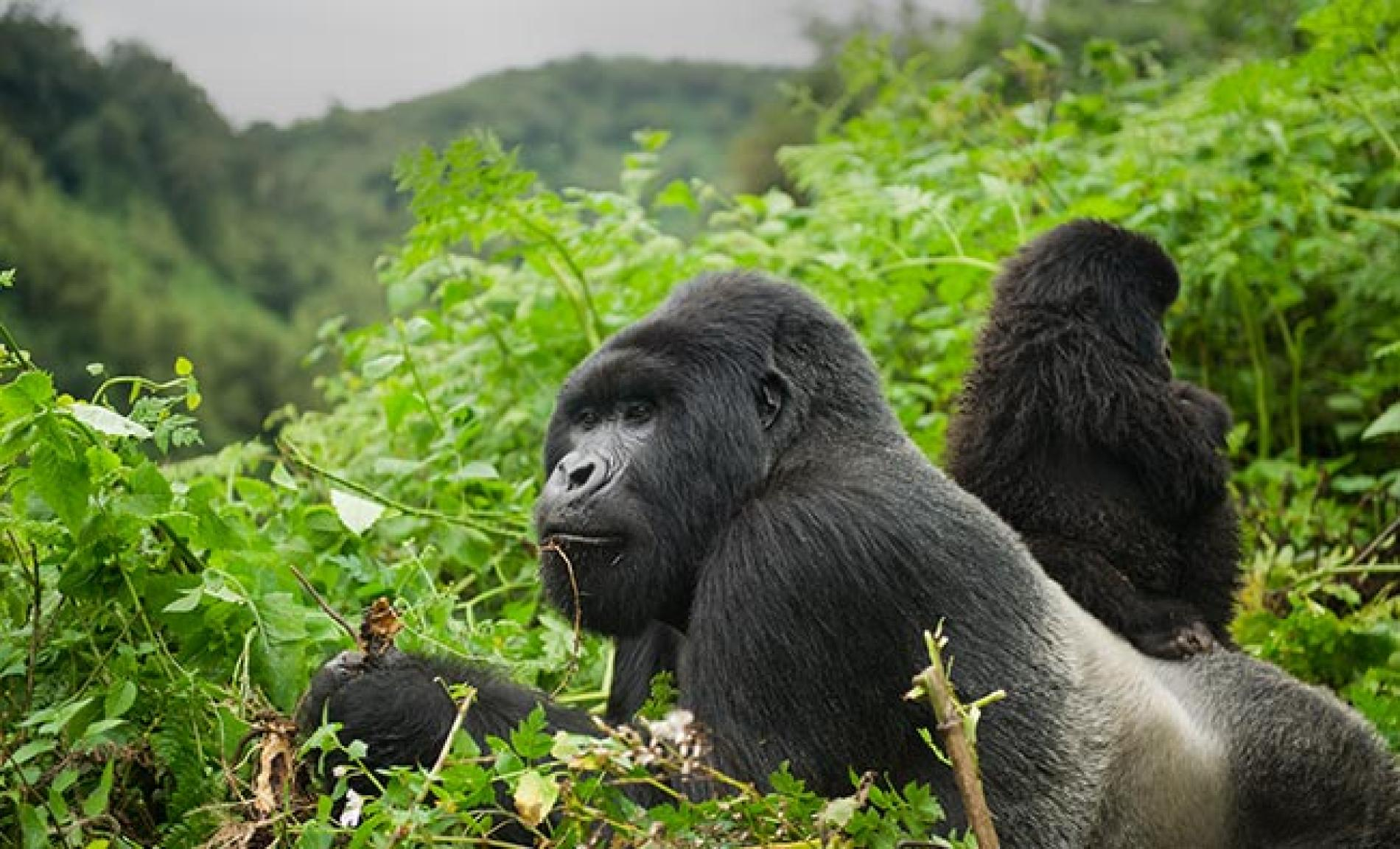
The most obvious difference is size. Gorillas are the largest living primates. Adult male silverbacks can weigh between 136–220 kg (300–485 lbs) or more, standing up to 1.8 meters (5 ft 11 in) tall when upright, with an arm span reaching over 2.6 meters.
Females are significantly smaller, typically 68–113 kg. In contrast, adult male chimpanzees weigh 40–70 kg (88–154 lbs), with females around 27–50 kg. Chimps stand about 1–1.2 meters (3.3–4 ft) tall. A large silverback gorilla can weigh three to four times as much as a male chimpanzee.
This massive size difference translates directly into strength. Gorillas possess immense physical power, with estimates suggesting they are 6–10 times stronger than an average human. Their broad chests, muscular arms, and robust skeletal structure support a lifestyle dominated by ground movement and vegetation processing.
Chimpanzees, while smaller, are exceptionally strong for their body size — roughly 1.5–2 times stronger than humans pound-for-pound — with dense muscle fibers suited for explosive climbing and swinging through trees.
Appearance also sets them apart. Gorillas have black or dark skin on their faces, small ears positioned toward the back of the head, and a more pronounced sagittal crest (a bony ridge on the skull) in males, which anchors powerful jaw muscles. Their bodies are covered in thick, dark hair, though silverbacks develop a distinctive silvery-gray saddle on their backs.
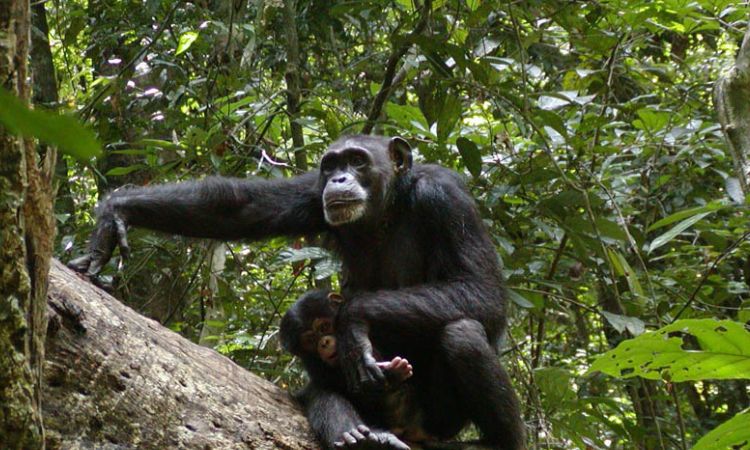
Chimpanzees have pinker faces, large protruding ears, and a more slender build with longer legs relative to their arms. Their hair is typically black but covers the body differently, leaving the face and ears more exposed.
Gorillas have less flexible hands and feet adapted for knuckle-walking on the ground, while chimpanzees have more dexterous thumbs and feet suited for arboreal life, allowing superior climbing and manipulation of objects.
Habitat and Distribution
Gorillas and chimpanzees occupy different ecological niches in equatorial Africa. Gorillas are primarily ground-dwelling and inhabit dense forests. There are two main species: Western gorillas (including lowland) and Eastern gorillas (including mountain gorillas).
Mountain gorillas live at higher altitudes (2,200–4,300m) in the Virunga Volcanoes and Bwindi Impenetrable Forest, while lowland gorillas prefer lower elevation forests.
Chimpanzees are more versatile and widespread across 21 countries in West and Central Africa. They spend significant time in trees but also travel on the ground.
Their habitats range from rainforests to savanna woodlands. This flexibility gives chimpanzees a broader distribution compared to the more habitat-specific gorillas.
Diet and Feeding Behavior
Dietary differences reflect their body sizes and habitats. Gorillas are primarily herbivores. Their massive guts and long digestive tracts allow them to process fibrous vegetation such as leaves, stems, shoots, bark, roots, and bamboo. Fruit forms only a small part of their diet. An adult silverback can consume up to 30 kg of vegetation daily.
Chimpanzees are omnivores with a more varied diet. They heavily favor ripe fruits (frugivorous) but also eat leaves, seeds, flowers, insects, honey, and occasionally meat.
They are known to hunt small mammals, including monkeys, using coordinated group strategies. This opportunistic feeding behavior demonstrates greater dietary flexibility than gorillas.
Social Structure and Behavior
Social organization reveals profound differences. Gorillas live in stable, cohesive family groups typically consisting of 5–30 individuals, led by a dominant silverback male.
The silverback makes decisions, protects the group from threats, and mediates conflicts. Groups are relatively peaceful, with clear hierarchies. Gorillas spend most of their time on the ground and build new nests on the forest floor each night.
Chimpanzees live in much larger, more fluid communities of 20–150+ individuals. Their societies are multi-male and multi-female, with complex alliances, dominance hierarchies, and frequent fission-fusion dynamics (subgroups splitting and rejoining).
Males form strong bonds and often engage in territorial patrols and inter-group conflicts, sometimes resulting in lethal violence. Chimpanzees build nests in trees and are far more arboreal.
Gorillas exhibit less aggression overall and are known for their gentle, empathetic nature (famous incidents include gorillas protecting injured humans). Chimpanzees display higher levels of aggression, political maneuvering, and even warfare between communities.
Intelligence, Tool Use, and Communication
Chimpanzees are generally considered more intelligent and innovative. They excel in tool use — using sticks to fish for termites, stones to crack nuts, and leaves as sponges.
They demonstrate problem-solving, planning, and even rudimentary cultural transmission across generations. In captivity, they have learned sign language and shown self-awareness in mirror tests.
Gorillas are also highly intelligent but express it differently. They are capable of tool use (though less frequently observed in the wild) and have learned sign language, with famous individuals like Koko demonstrating advanced communication.
Their intelligence appears more oriented toward social understanding and emotional depth within stable family units rather than the dynamic problem-solving seen in chimps.
Communication differs too. Gorillas rely more on body language, postures, and vocalizations like grunts and roars. Chimpanzees have a richer repertoire of vocal calls, facial expressions, and gestures, reflecting their more complex social interactions.
Conservation Status and Threats
Both species face severe threats, but their statuses differ slightly. All gorilla subspecies are Critically Endangered or Endangered, with mountain gorillas numbering around 1,000+ individuals (a conservation success story showing slow recovery). Western lowland gorillas have larger populations but still decline due to poaching, habitat loss, and disease.
Chimpanzees are listed as Endangered, with an estimated 170,000–300,000 remaining across subspecies. They suffer from similar pressures plus higher vulnerability to bushmeat hunting and the illegal pet trade.
Both are highly susceptible to human diseases like Ebola and respiratory infections due to genetic similarity.
Similarities and Why They Matter
Despite the differences, gorillas and chimpanzees share key traits: they are long-lived (35–50+ years), have slow reproductive rates (females give birth every 4–6 years), and form strong emotional bonds. Both play crucial roles in forest ecosystems as seed dispersers and vegetation managers.
These differences highlight evolutionary adaptations: gorillas as peaceful giants specialized for processing abundant foliage, and chimpanzees as agile, clever opportunists thriving through social complexity and versatility.
In conclusion, the differences between gorillas and chimpanzees — from the massive, calm silverback leading his family through misty forests to the energetic, tactical chimpanzee navigating complex communities — showcase the incredible diversity within our closest relatives.
Appreciating these distinctions deepens our understanding of primate evolution and the urgent need to protect both species and their habitats. Whether observing a silverback’s gentle power or a chimp troop’s lively intelligence on a safari, encounters with these great apes remain among the most profound wildlife experiences on Earth.